
THE JOINT SONGWE RIVER BASIN COMMISSION (SONGWECOM) CONDUCTED A CAPACITY BUILDING WORKSHOP ON PROJECT CONCEPT NOTE DEVELOPMENT.
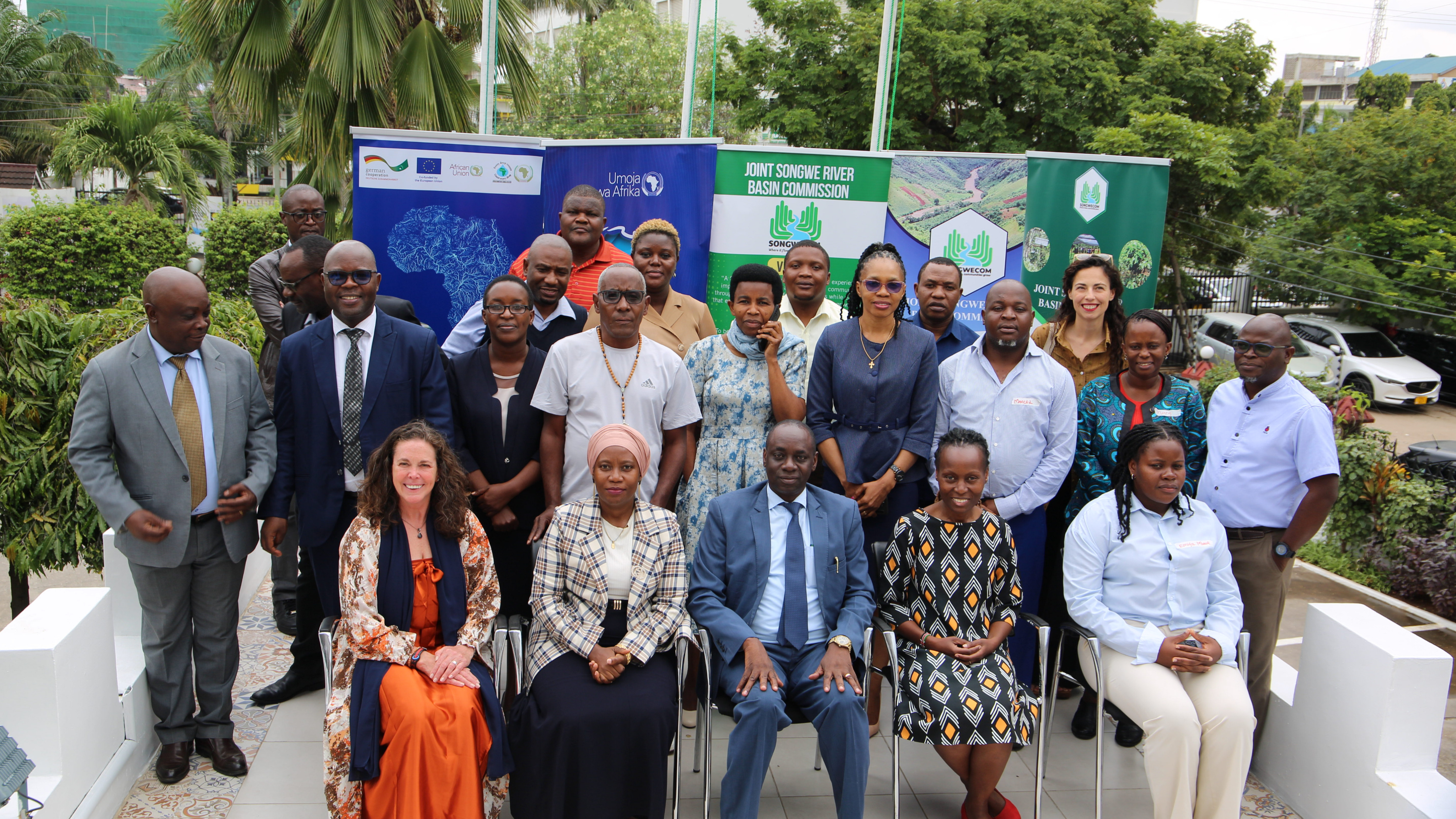
Executive Secretary of the Joint Songwe River Basin Commission (SONGWECOM) welcomed all participants to Dar es Salaam for the Capacity Building Workshop on the Development of Project Concept Notes for the Songwe River Basin. The representative expressed honour and privilege in hosting the important workshop, which aimed to strengthen capacity in project preparation and mobilization of resources for sustainable development within the basin.
At the outset, the representative conveyed sincere appreciation to the African Union Commission (AUC) and GIZ for their continued collaboration, technical support and commitment towards enhancing transboundary water cooperation, climate resilience and sustainable development in the Songwe River Basin. It was noted that the partnership demonstrated the importance of African solidarity and practical cooperation in addressing complex development and climate challenges affecting shared river basins across the continent.
The representative further acknowledged the Governments of the Republic of Malawi and the United Republic of Tanzania for their continued support and commitment towards the operationalisation of SONGWECOM and implementation of the Songwe River Basin Development Programme. The progress achieved so far was attributed to strong political goodwill, leadership and cooperation between the two Member States.
The representative highlighted that the Songwe River Basin is one of the strategic transboundary river basins in Southern Africa, covering approximately 4,243 square kilometres, with 55 percent located in Tanzania and 45 percent in Malawi. It was reported that the basin supports the livelihoods of more than 460,000 people and serves as an important source of water, food, energy, biodiversity and economic opportunities for communities on both sides of the border. The basin was also recognised as an important tributary of the wider Zambezi River Basin system.
However, the representative noted that scientific assessments undertaken through the Transboundary Diagnostic Analysis (2023) and Strategic Action Planning (2024) processes had identified significant environmental and socio-economic challenges facing the basin. These challenges include ecosystem degradation, biodiversity loss, land degradation, soil erosion, climate change impacts, poverty, inadequate infrastructure and unsustainable natural resource utilisation. It was further reported that woodland cover had declined by approximately 62 percent between 1990 and 2020, while agricultural land had expanded by nearly 200 percent during the same period, contributing to increased sedimentation, declining ecosystem services and increased vulnerability among local communities.
The representative explained that although the basin receives an average annual rainfall of approximately 1,482 millimetres, rainfall variability has increased due to climate change. Rising temperatures were also reported to be putting additional pressure on water resources, agriculture and ecosystem health. Furthermore, recurrent flash floods along the Songwe River continue to alter the river course, affect international boundaries, damage infrastructure and threaten the livelihoods of more than 50,000 people while impacting approximately 15,000 hectares of land.
The representative emphasised that these challenges demonstrate the urgent need for accelerated investments in climate resilience, water security, ecosystem restoration, sustainable livelihoods and green economic development.
The representative highlighted that the collective vision guiding interventions in the basin is the Shared Vision 2050 for the Songwe River Basin, which aims to achieve improved quality of life among local communities through sustainable use of basin resources while ensuring that economic growth exceeds population growth.
It was further noted that the Member States adopted the Songwe River Basin Development Programme (2014–2024), a ten-year transboundary investment framework designed to transform the basin into a climate-resilient, economically vibrant and environmentally sustainable development corridor. The programme provides a pipeline of strategic investments covering water resources development, hydropower generation, irrigation, water supply and sanitation, flood risk management, ecosystem restoration, climate resilience, livelihood development, infrastructure development and institutional strengthening.
The representative highlighted the Lower Songwe Dam and Hydropower Plant Project as one of the flagship investments, noting that the project is expected to generate approximately 180.2 MW of renewable energy, produce about 686 GWh of electricity annually, provide flood protection to more than 82,000 people, support irrigation development covering over 6,200 hectares, improve water security and contribute to regional economic integration and climate change mitigation.
The representative informed participants that the workshop was being conducted at a strategic moment when experts would collaborate over four days to develop strategic project concept notes aimed at unlocking financing opportunities for the basin. The priority projects identified included:
- Songwe River Irrigation Schemes Project, estimated at approximately USD 40 million.
- Songwe River Basin Water Supply and Sanitation Project, estimated at approximately USD 19.5 million.
- Songwe River Basin Carbon Market Programme, aimed at unlocking climate finance and carbon investment opportunities while supporting livelihoods, ecosystem restoration and sustainable land management.
- Advancing Low Carbon Development through the Lower Songwe Dam, Hydropower Plant and Transmission Lines Project, estimated at approximately USD 1 million for project component design.
- Songwe River Basin Flood Early Warning System and Flood Risk Management Project, estimated at approximately USD 45 million.
Executive Secretary emphasised that these projects represent important building blocks towards achieving climate-resilient development, green growth, poverty reduction, food security, water security and implementation of the Sustainable Development Goals, Agenda 2063, national development plans and Nationally Determined Contributions of both countries.
Executive Secretary noted that experience from international climate and development financing demonstrates that quality projects attract resources. Therefore, the challenge is not only identifying development needs but also transforming them into well-designed, bankable and investment-ready projects capable of attracting support from climate funds, multilateral development banks, private investors and development partners.
The workshop was described as an important opportunity to strengthen capacity in project preparation, concept development, climate finance access and investment planning. Participants were encouraged to actively engage, share experiences, exchange ideas and develop high-quality concept notes that could progress towards financing and implementation.
Executive Secretary concluded by wishing all participants productive deliberations, successful outcomes and an enjoyable stay in Dar es Salaam.